

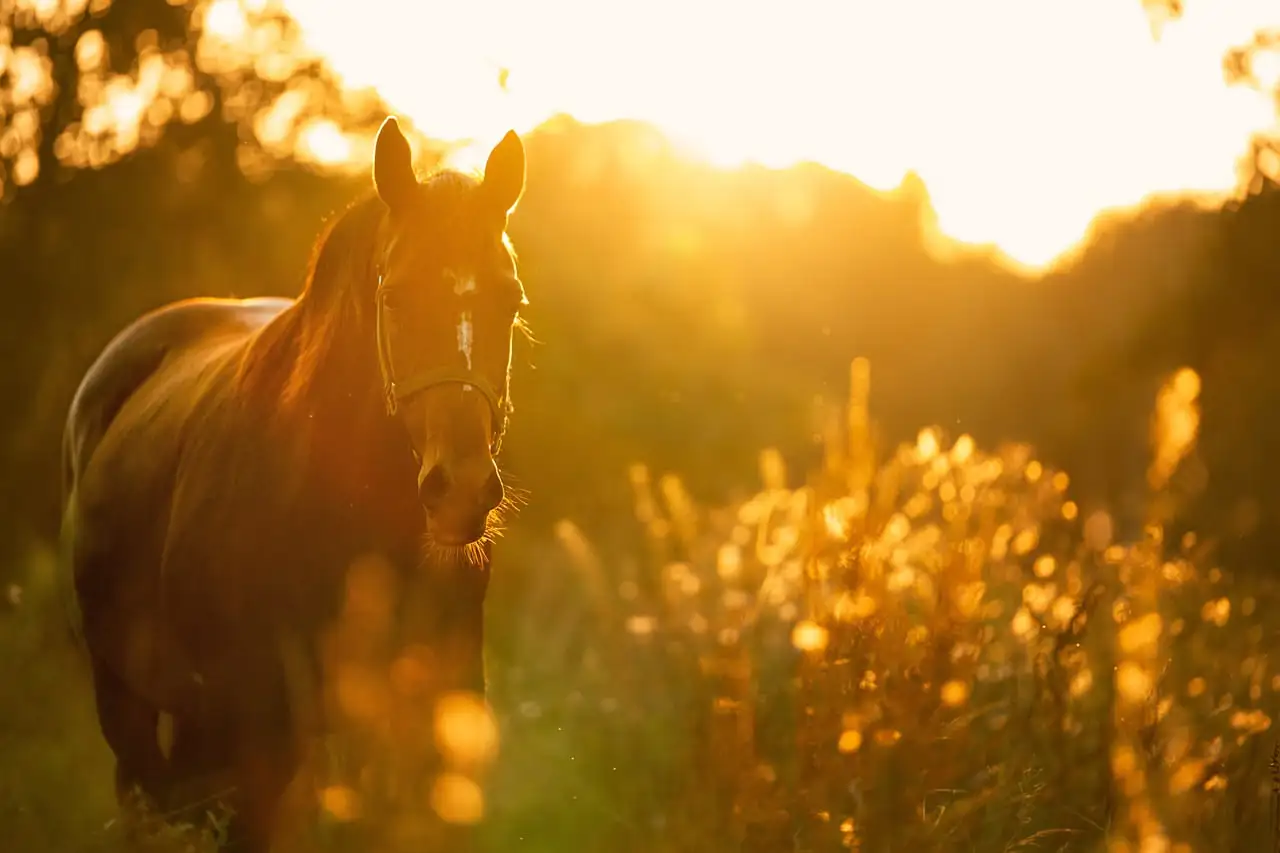
When we celebrate the retirement of an equine partner, it couldn’t be more bittersweet. Equine-assisted services (EAS) programs rely on special horses, ponies, donkeys, and mules. When it comes time to say goodbye, it is a challenge for participants, volunteers, staff and communities. However, there are simple practices to implement that can ease the transition.
Proper communication of the change, specific to what is happening with each equine, is key.
Equines that are moving to a new home: Communicating about the retirement of a herd member with volunteers and staff is just as essential as it is to participants. Our communities grow to love and rely on each herd member. When that pony heads home, pre-class routines, feeding, turnout schedules and so much more will have a gap where there wasn’t one before. Communicating the retirement announcement is important to a program’s entire community network and it can be as simple as a mass email or social media post.
Planned euthanasia or unexpected death of a herd member: Even though EAS equines are not often owned by a center’s community members, we can’t discount that their experience of loss could be comparable to that of the equine’s owner. Using clear language such as “Harley died”, offering comfort, support and consolation are all ways to show care to those who may be struggling with the loss (AACAP, 2017). Offering families and caregiving staff resources to use to help process the loss can be helpful too.
It should be acknowledged that a herd member moving on can influence other herd members too. While we may not be certain that horse’s grieve the loss of a herd mate, in a euthanasia setting the loss of a horse’s presence can lead to separation anxiety (Williams, 2024).
Once the announcement has been made, equally as important is the celebration of the impact that the equine had on the community.
We host retirement parties and celebrations of life for humans, why not horses? Throw a party for the ponies too! Invite your community to come enjoy treats, capture photos, tell stories and share space one more time with the horse that they have come to love. Design and print a photo album or poster that can be kept in gathering spaces or even gifted to community members. It can be as big as a party with RSVPs, photo booths, treats for humans and equines. It can also be as small as hosting drop-by times for individuals to come and wish their pony-friend “Happy Trails”. Consider adding a photo wall with a portrait of each herd member throughout the years or a garden where past horses may have a bed dedicated to them, giving community members a space to visit and reflect, the ideas are limitless! Acknowledging the horse who is moving on can also include posting to social media platforms and calling on virtual communities and followers to share memories in the comments section.
While how to celebrate may be an easy choice, we acknowledge that the decision to retire can be a tougher one. For more information regarding decision making surrounding retirement or euthanasia, stay tuned for the upcoming Winter 2025 edition of Strides magazine for Holly Sundmaker’s article Off to Greener Pastures: The Why, When, What, Where, and How of Retiring EAS Equines.
By Alyson Galow
Alyson Galow is a member of PATH Intl.’s Equine Welfare Committee, CTRI, and the equine manager at PATH Intl. Member Center Free Rein Therapeutic Riding in Spokane, WA.
RESOURCES:
Williams, J. (2024, Jan 4). Separating Overly Attached Horse Buddies. Equus.