

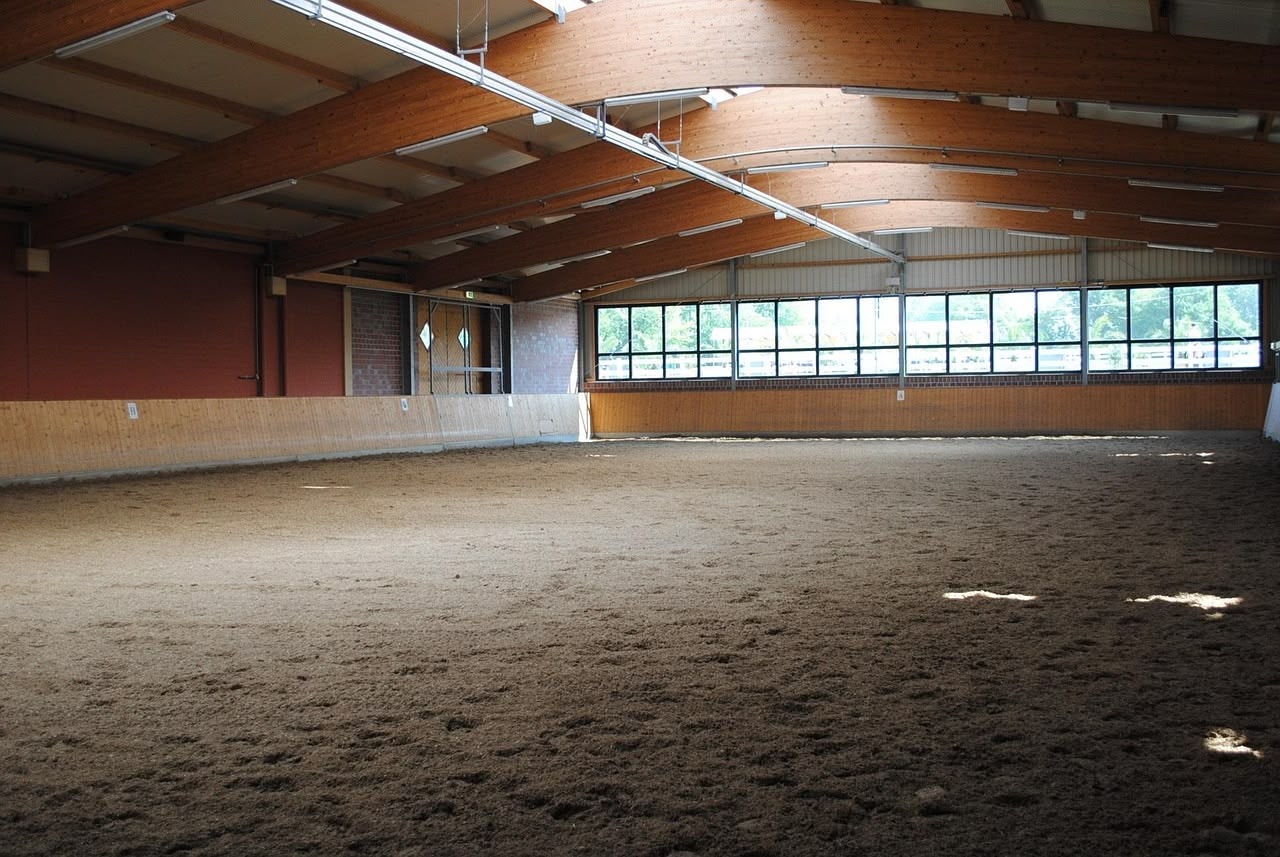
How often do you think about the physical space where your session occurs? Is it so routine that you forget about it? Or is it something you think about before, during, and after each session? Do you host different types of EAS sessions in different spaces? How do you determine where you are going to hold a session? Why does any of this even matter?
The physical spaces where sessions are held may have impacts on the welfare of the humans and horses involved and what these spaces look like varies widely across programs and practitioners. Some sessions occur in 20-acre pastures while other sessions occur with the horse on crossties, in a round pen or arena. So, what are some considerations we should be thinking about when we think about the spaces for our sessions?
1. Safety for horses & humans
Physical Safety: Is the physical environment safe for horses and humans? For example, is the space free of hazards to physical health (e.g., low dust, sheltered from weather).
Emotional Safety: Do the horses and humans feel safe in their environment? For example, some horses prefer to work where they can be near or with other horses. Some humans prefer to work in spaces where they can easily observe the surrounding environment (instead of in an enclosed space).
2. Agency for horses & humans
Do your horses or participants have the opportunity to choose where they work for their sessions? What would it look like if this were the case? Giving a participant influence within their session could be pivotal to their growth and giving a horse agency could have a direct impact on their welfare.
3. Practicality
Is there more than one space available for sessions on your farm? There may not be and that is ok! Some farms are very busy and have different spaces set aside for different activities. However, there are always opportunities to be creative. Could you take a trail ride down the driveway or through the paddock? Could you meet the horse in the field instead of bringing them into the barn?
Questions to ask ourselves as we consider the impacts of physical spaces (adapted from Nieforth, 2024):
- Where are your sessions taking place? How might this environment be affecting your equine’s mental state? Your participant’s mental state?
- Are you considering the amount of time your equines are spending in different spaces for sessions?
- What would it look like to give your equines or participants agency in choosing the space for the session?
- What implications could a different space have on humans and equines?
Ultimately, you know your clients and horses best, so make the decision that is right for both in that moment rather than relying on routines or what you always do. And always remember to keep in mind the impact that the environment may have on the session!
By Leanne Nieforth
Equine Welfare Committee tips sponsored by Zoetis, Official Equine Health & Wellness Partner of PATH Intl.
SOURCES:
- Nieforth, L.O. (2024). Equine-assisted service sessions in crossties, arenas, and 10-acre pastures: Does it matter? CABI Animal Behaviour and Welfare Cases.
*if you would like a PDF of this article, please email