

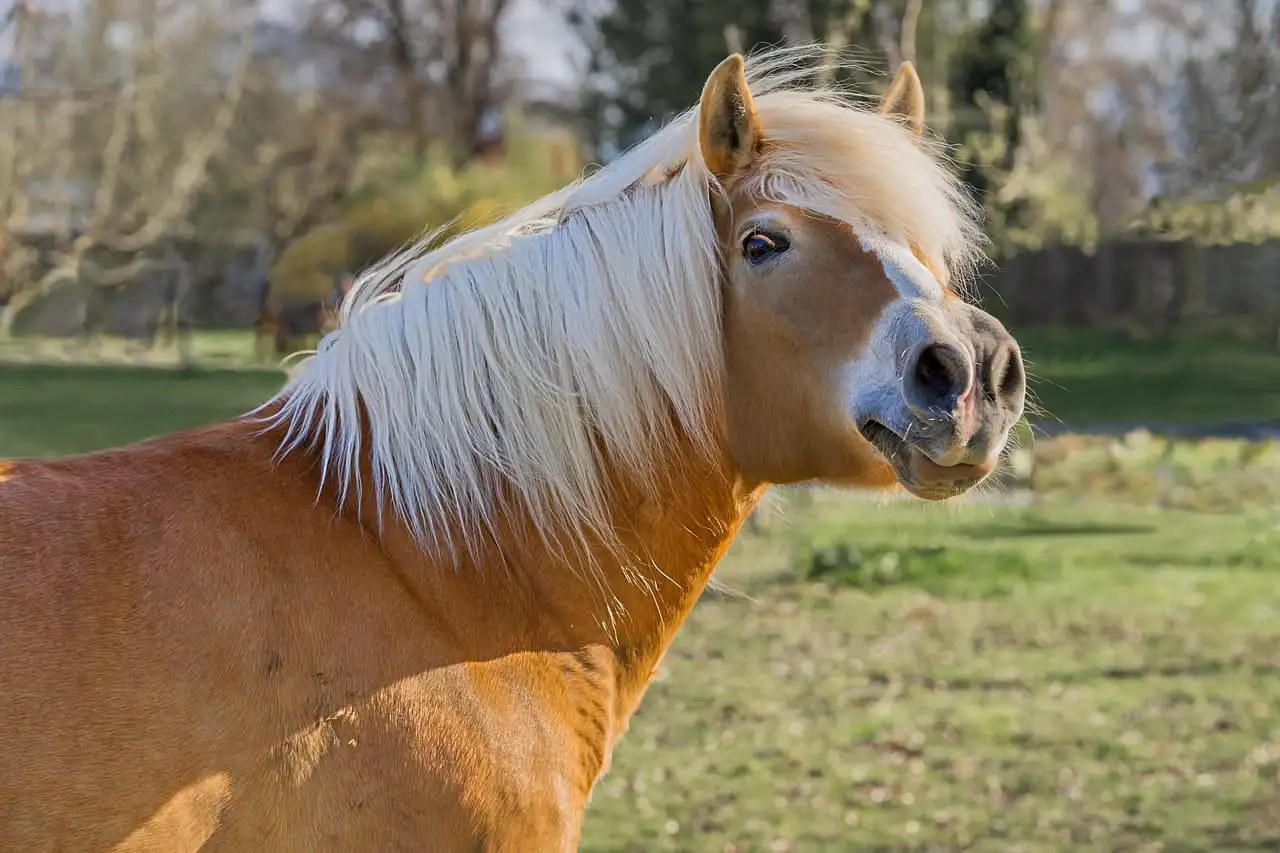
We are likely all guilty of name-calling in the barn at one time or another. Whether it’s our personal horse or an equine within our EAS program’s herd there has likely been a time or two when the sentence stated is along the lines of:
“Ugh, she was such a brat today!”
“Did you see how terrible he was?!”
“She was kind of dumb during our ride…”
But what are we actually saying? And how do our statements impact our equine’s experience as well as our community at the barn? It can be too easy to revert to this name-calling of our equine partners, oftentimes without truly realizing the potential implications of the words we speak. As EAS professionals with a passion for partnering with equines, we strive to create a positive environment and culture. However, statements like the examples above could be creating an element of unintentional negativity.
When it comes to the effect of your voice and words on your equine partner, your tone alone can impact their experience (Maigrot et al., 2022). It has been shown that equines can discriminate between negative and positive nonverbal tones (Smith et al., 2018). For example, let’s say you had a difficult schooling ride, perhaps a shared experience of both your horse and yourself. You walk your mount around grumbling about the lack of improvement or the behaviors you rode. Your horse is likely keying into the negative tone of your commentary and is additionally picking up on the changes of how you are now physically carrying yourself. We don’t often complain about our ride or groundwork session in happy, soothing tones.
Now expand that thought to the environment surrounding the working equine partners in EAS. Our tone and word choice can have a large impact on our human communities too. Volunteers may observe and hear these comments and assume they are standard practice, when in reality, it’s simply a bad habit. Participants may hear these words and have the same takeaway as the volunteers, misinterpret what we mean, or even take them personally.
We all know how frustrating working through an undesirable behavior can be when working with our equine partners. While it is easy to call them dumb, stubborn, bratty, etc., try to instead move towards using observation-based phrases like “She was tense today”. Using ethograms to acknowledge and track the behaviors that leave us frustrated could be a way to transfer our feelings towards the beginnings of a solution and have less of a potential negative impact on our equine partners, volunteers, and participants.
By Alyson Galow
Alyson Galow is a member of the PATH Intl. Equine Welfare Committee.
Equine Welfare Committee tips sponsored by Zoetis, Official Equine Health & Wellness Partner of PATH Intl.
SOURCES:
- Maigrot, AL., Hillmann, E. & Briefer, E.F. Cross-species discrimination of vocal expression of emotional valence by Equidae and Suidae. BMC Biol 20, 106 (2022).
- Smith, A. V., Proops, L., Grounds, K., Wathan, J., Scott, S. K., & McComb, K. (2018). Domestic horses (Equus caballus) discriminate
between negative and positive human nonverbal vocalisations. Scientific reports, 8(1), 13052.